
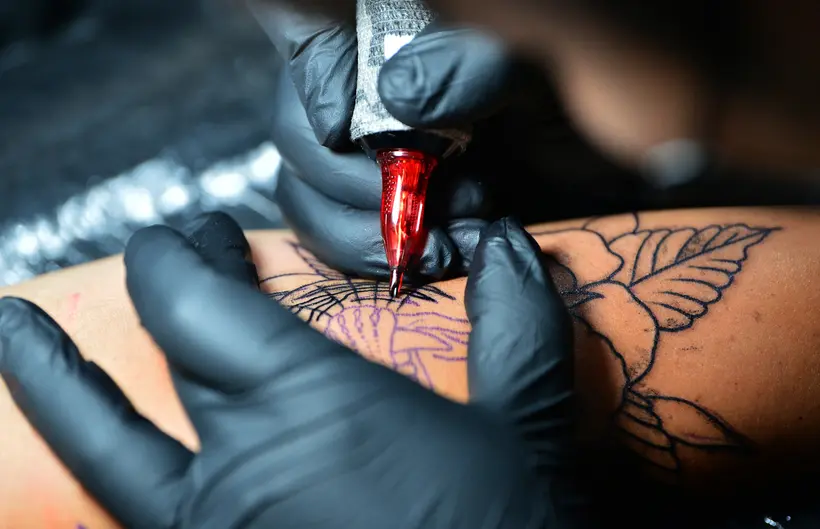
Tattoo legalization in Korea 2025 marks a turning point for artists as tattooing becomes fully regulated and professionalized. Kinink leads this change with proactive global safety standards, including EU REACH compliance, FDA registration, and CTL sterility testing, ensuring unmatched trust and safety in the new era.
KinInk.co.kr
After decades of legal ambiguity, tattoo legalization in Korea 2025 signals a historic transformation for the tattoo industry. With safety regulations and professional licensing now in motion, Kinink sets new global benchmarks, empowering Korean tattoo artists to enter a new era of artistry, trust, and international compliance.
Table of Contents

Kinink’s Proactive Response to the Safety of Tattoo Inks in Korea
The year 2025 marks a historic transformation for Korea’s tattoo industry.
After 33 years of ongoing debate, tattoo artists are finally stepping forward as recognized professionals. This is not merely a legal issue—it signifies the dawn of a new era.
Two landmark developments—the September 25th passage of the Tattooist Law in the National Assembly and the June 14th transfer of tattoo ink management to the MFDS with mandatory registration—are reshaping the foundations of legality and safety in the industry.
Kinink has analyzed these major shifts and acted preemptively, exceeding all regulatory requirements to ensure that Korean tattoo artists can confidently enter this new era with materials that meet the highest global safety standards.
Tattoo Legalization After 33 Years: The Meaning Behind the Tattooist Law
On September 25, 2025, the Tattooist Law was passed in the National Assembly—an unprecedented milestone in Korea’s tattoo history.
This legislation establishes the legal foundation that allows non-medical professionals to perform tattoo procedures, finally recognizing tattooing as a legitimate profession.
Four Key Points Every Tattoo Artist Must Know
| Key Provision | Details |
|---|---|
| Implementation Date | Scheduled to take effect in 2027 (two-year grace period after promulgation) |
| Licensing System | Only those who pass the national exam under the Ministry of Health and Welfare can obtain an official tattooist license |
| Transitional License Exception | Temporary registration system for up to two years to support the smooth transition of experienced artists |
| Scope of Application | Covers both decorative tattoos (body art) and cosmetic tattoos (semi-permanent makeup, SMP, etc.) |
A Crucial Distinction: Tattooing vs. Tattoo Removal
One critical point that must not be overlooked: tattooing and tattoo removal remain separate domains.
While tattooing has now been legalized for non-medical professionals, tattoo removal—due to its invasive nature and potential side effects—remains strictly within the medical field.
Artists must clearly understand this boundary, as performing removal procedures could still result in legal liability.
June 14 Regulation: The Gap Between Ink Safety and Policy Reality
– Why Tattoo Ink Changed After June 14: Sterility, Precision, and Traceability –
While the Tattooist Law paves the way for professional recognition in the future, the June 14 MFDS regulation on tattoo inks focuses on immediate safety concerns.
The Industry Confusion: Inks Still Classified as ‘Hygienic Products’
As of June 14, tattoo inks are officially regulated by the MFDS. However, they are still managed under the Hygienic Products Management Act—the same category as disposable chopsticks or toothpicks.
This classification exposes a fundamental flaw: substances injected directly into the skin and remaining permanently should not be subject to the same standards as disposable items.
This misalignment has led to widespread confusion. Many suppliers either fail to complete the required business registration or underestimate the critical importance of ink safety, widening the regulatory gap.
Kinink’s Proactive Measures: Refusing ‘Hygienic Product’-Level Standards
Kinink did not wait for domestic laws to catch up. Instead, we implemented world-class safety standards ahead of regulation, setting a new benchmark for the industry.
| Kinink’s International Safety Standards | Basis and Significance |
|---|---|
| Compliance with EU REACH Regulations | Adheres to REACH (Regulation 1907/2006 Annex XVII), the world’s strictest chemical safety standard, minimizing hazardous substances and carcinogenic amines. |
| CTL Sterility Testing Completed | Passed sterile testing by Germany’s CTL, applying medical-grade hygiene standards far beyond the domestic “hygienic product” level to minimize infection risks. |
| U.S. FDA Registration | Completed registration under the FDA’s Voluntary Cosmetic Registration Program (VCRP), meeting U.S. safety and quality control requirements for international distribution. |
| V-Label Certified Vegan | Officially recognized for ethical manufacturing—free from animal ingredients and animal testing—aligning with the professional ethics demanded by modern tattooists. |
The New Era: A Professional’s Responsibility

As the Tattooist License System launches in 2027, artists will need to earn client trust not only through skill but also through the safety of the materials they use.
A license proves your skill.
The ink proves your integrity.
There is no need to wait until the law fully takes effect—clients already demand safety today. True professionals uphold both artistry and ethics in their material choices.
“Product Safety × Procedural Standards × Data Transparency” Will Define Trust in the Legal Era
The June 14 MFDS framework ensures sterility, precision, and traceability in inks,
while the September 25 Tattooist Law establishes licensing, education, and facility standards for procedures.
Kinink integrates these two pillars through:
- Batch-level safety certification
- On-site SOP and education support
- Transparent data disclosure
With proactive standards that exceed all domestic and international regulations, Kinink remains a steadfast partner, empowering tattoo artists to focus solely on what matters most—creating their best work with total confidence.

