

Tattoo price outlook after legalization in Korea suggests prices will not rise uniformly, but baseline costs are likely to increase as licensing, hygiene compliance, insurance, and regulated ink standards take effect. The key shift is not simple price inflation, but a structural change toward transparent, safety-driven and value-based pricing.
KinInk.co.https://kinink.co.kr/en/partners/kr
Tattoo price after legalization Korea is becoming a major concern for both clients and artists as new licensing, hygiene regulations, and ink standards reshape the industry. Rather than sudden price spikes, legalization is expected to redefine pricing structures, shifting competition from ultra-low costs toward safety, transparency, and long-term service value.
Table of Contents
The Reality the Korean Market Must Watch in 2026
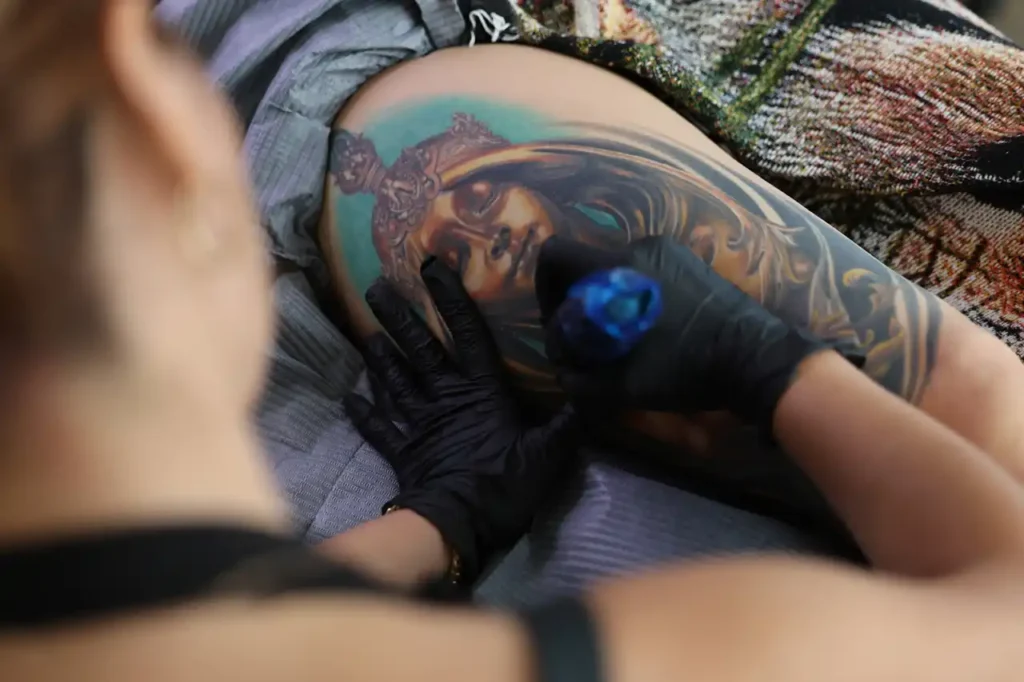
Korea’s tattoo culture is approaching a historic turning point.
On October 28, 2025, the Tattooist Act was enacted and promulgated, laying the institutional foundation for tattoo procedures — which had remained in a legal grey zone for 33 years — to enter the formal industrial system.
Following a preparation period, the law is scheduled to take effect on October 29, 2027.
As legalization approaches, one of the most frequently asked questions is how tattoo prices will change. This article provides a realistic outlook on that issue.
1. Why the Current “Transition Period” Requires Close Attention to Pricing
At present, the tattoo market is still legally influenced by restrictions on unlicensed medical practice.
However, social demand and industry scale have expanded beyond what the regulatory framework has been able to accommodate.
As 2027 implementation approaches, tattoo studios are facing a new operational environment:
- Stronger hygiene and facility standards
- Mandatory licensing and business registration systems
- Expanded transparency in payment and taxation structures
These structural changes are expected to reshape cost structures across the industry.
2. Why Tattoo Prices Are Likely to Change
Tattoo pricing is ultimately determined by:
Skill + Time + Operating Costs + Risk Management Costs
In the past, pricing in Korea was largely influenced by:
- Artist experience
- Design quality
- Word-of-mouth reputation
- Regional differences
After legalization, additional cost factors are likely to include:
- Maintenance of registered commercial space
- Hygiene and safety compliance
- Training and medical check-up requirements
- Liability insurance
- Documentation and disclosure obligations
This does not mean all tattoo prices will rise uniformly.
Rather, the basis of pricing itself is likely to change.
Consumers may increasingly evaluate not only size or design, but also:
- Legal business status
- Hygiene systems
- Post-procedure response capability
- Transparency in documentation
3. Four Structural Changes That May Drive Price Movement
3-1. Licensing and Institutional Entry Costs
The Tattooist Act is not merely about permission — it is about formal integration.
Requirements such as:
- National licensing exams
- Business registration
- Hygiene education
- Health screenings
- Record retention
- Professional liability insurance
may increase fixed costs and operational responsibility for practitioners.
3-2. Standardization of Hygiene and Safety Management
In a legalized market, sterilization, infection prevention, waste management, and documentation systems become more critical.
Costs that were previously invisible in the informal sector may emerge as clearly defined operational expenses — and these are likely to be reflected in pricing.
3-3. Regulation of Tattoo Pigments and Material Reliability
Since June 14, 2025, tattoo pigments have been managed as sanitary products under Korea’s Ministry of Food and Drug Safety.
By late October 2025:
- 13 business notifications were filed
- 42 pigment import reports were confirmed
Regulatory standards regarding restricted or prohibited ingredients suggest that:
The type and reliability of ink used may become a key pricing factor.
3-4. Rising Labor and Service Costs
Separate from legalization, broader economic trends are also relevant:
- Korea’s 2026 minimum wage: 10,320 KRW per hour
- January 2026 CPI increase: +2.0% year-on-year
Even without legal changes, the tattoo market is already facing upward pressure on labor and operating costs.
Legal compliance expenses could further challenge the sustainability of ultra-low-price structures.
4. How the Market May Become More Segmented
The most likely outcome is clearer market differentiation.
Entry-Level and Small Tattoo Market
Ultra-low-price competition may gradually decline.
Legal operation requires minimum standards in:
- Hygiene
- Physical space
- Documentation
- Insurance
As a result, a new baseline price level may emerge.
Mid- to Large-Scale Custom Tattoo Market
Prices may not simply rise, but rather become more justifiable and structured.
Premium artists may increasingly justify pricing through:
- Registered studio environments
- Hygiene systems
- Accountability and documentation
- Verified ink usage
- Brand consistency
SMP, Eyeline, and PMU Markets
These sectors may evolve differently due to higher sensitivity to:
- Color stability
- Safety risks
- Pigment management
Consumers in these segments may prioritize:
Traceability and safety over purely aesthetic outcomes.
5. A Key Variable: Supply Shock May Be Moderate
A sharp price surge immediately after legalization is not guaranteed.
The law includes temporary registration provisions allowing qualified existing practitioners to operate for up to two years after implementation.
This transitional buffer may:
- Prevent sudden supply shortages
- Enable gradual price restructuring
Likely scenario:
- Informal low-price market shrinks
- Legal baseline pricing rises
- Premium differentiation strengthens
6. From “Cheapest” to “Explainable” Pricing
The most significant change after legalization may not be price levels themselves, but what is included in the price.
Consumers may increasingly evaluate whether pricing reflects:
- Licensed institutional participation
- Registered business operation
- Hygiene and safety systems
- Risk disclosure and response capacity
- Liability insurance
- Reliable ink usage
In this sense, tattoo pricing may be better described as being redefined rather than simply increasing.
7. Conclusion: The Core Shift Is in Pricing Standards
As of 2026, one conclusion is clear:
Tattoo prices in Korea may not uniformly surge after legalization.
However, the combined effects of:
- Institutional compliance costs
- Hygiene responsibilities
- Ink regulation
- Rising labor and inflation
are likely to raise baseline pricing in the formal market.
Meanwhile, ultra-low-cost informal sectors may gradually diminish.
The Korean tattoo industry is expected to transition into a comprehensive service market, encompassing licensing, facilities, hygiene, documentation, accountability, and material reliability.
This structural shift may ultimately have the greatest impact on tattoo pricing.
8. Kinink’s Perspective: The Rise of Value-Driven Consumption
After legalization, consumers may prioritize:
- Safety
- Hygiene
- Transparency
- Ink reliability
Kinink anticipates that the role of documentable, quality-assured inks will become increasingly important.
- For clients: a wider spectrum between premium safe procedures and rational choices
- For tattooists: the opportunity to build recognized artistic careers within a legitimate professional framework
FAQs
How will tattoo price after legalization Korea change?
Tattoo price after legalization Korea is expected to rise gradually rather than spike suddenly, as licensing, hygiene compliance, insurance, and regulated ink standards increase operating costs. The tattoo legalization impact will likely shift pricing toward transparency, safety, and structured service value across the formal tattoo industry Korea.
Why is tattoo cost Korea expected to increase under the new tattoo law Korea?
Tattoo cost Korea may increase due to mandatory licensing, hygiene regulation, facility standards, and insurance requirements introduced by tattoo law Korea. These structural changes raise fixed operating expenses, making ultra-low informal pricing less sustainable in the legalized tattoo industry Korea environment.
Will tattoo legalization impact small tattoo studios differently in Korea?
Yes, tattoo legalization impact may affect small studios more significantly because compliance costs related to hygiene regulation, documentation, and registered workspace requirements can be proportionally higher. This may lead to clearer price segmentation within the tattoo industry Korea, especially for entry-level tattoo cost Korea services.
How do tattoo ink regulation Korea rules influence tattoo price after legalization Korea?
Tattoo ink regulation Korea strengthens safety standards and restricts harmful ingredients, which can increase material costs. As regulated inks become a pricing factor, tattoo price after legalization Korea may reflect not only design skill but also verified ink quality, traceability, and health compliance within tattoo law Korea.
Will tattoo price after legalization Korea rise equally across all tattoo styles?
Tattoo price after legalization Korea is unlikely to rise equally across all styles. Premium custom work, SMP, and PMU services may justify higher pricing through safety systems and regulated ink use, while simpler tattoo cost Korea segments may stabilize at new legal baseline pricing levels within the tattoo industry Korea.

