
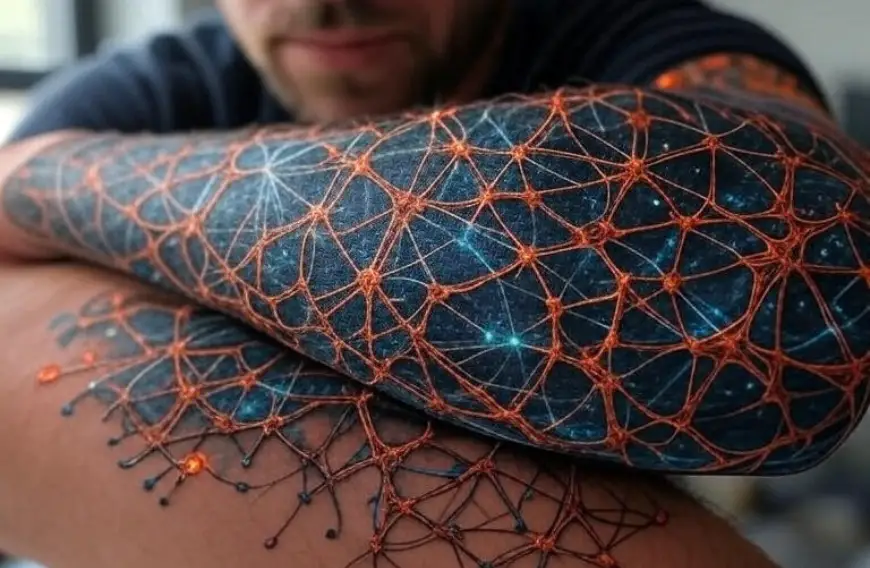

AI in tattoo manufacturing uses artificial intelligence, machine learning, and computer vision to improve tattoo ink quality, production efficiency, color consistency, and regulatory compliance. Smart manufacturing systems help reduce defects, enhance quality control, and support safer, more reliable tattoo ink production for manufacturers and professional artists.
KinInk.co.kr
Artificial intelligence (AI) is reshaping tattoo manufacturing by improving quality control, automating production processes, enhancing pigment consistency, predicting equipment maintenance, and strengthening regulatory compliance. Rather than replacing skilled chemists and manufacturing specialists, AI serves as a powerful decision-support tool that helps manufacturers produce safer, more consistent, and higher-quality tattoo inks while reducing waste and operational costs.
As tattoo regulations become more rigorous and global demand for premium tattoo products continues to grow, manufacturers are increasingly integrating AI with machine vision, industrial automation, laboratory analytics, and digital quality management systems. The result is a smarter manufacturing environment where every production batch can be monitored with greater precision than traditional manual inspection alone.
Table of Contents
What Is AI in Tattoo Manufacturing?
AI in tattoo manufacturing refers to the use of machine learning, computer vision, predictive analytics, and intelligent automation throughout the tattoo ink production lifecycle.
Rather than focusing solely on factory automation, AI analyzes manufacturing data to help improve:
- Pigment consistency
- Sterility monitoring
- Color accuracy
- Equipment performance
- Inventory planning
- Regulatory documentation
- Quality assurance
- Production efficiency
The goal is not to eliminate human expertise but to enable manufacturers to make faster, more accurate, and evidence-based decisions.
Why AI Is Becoming Important in Tattoo Manufacturing
The tattoo industry has evolved from a niche artistic market into a global manufacturing sector supplying professional tattoo studios, medical tattoo applications, permanent makeup specialists, and cosmetic procedures.
Manufacturers now face increasing demands for:
- Consistent product quality
- International regulatory compliance
- Sterile production environments
- Supply chain transparency
- Faster product development
- Reduced production waste
AI helps address these challenges by continuously analyzing large volumes of production and quality data that would be difficult to evaluate manually.
How AI Works in a Modern Tattoo Ink Factory
A typical AI-assisted manufacturing workflow combines sensors, laboratory instruments, automated equipment, and specialized software.
Step 1: Raw Material Inspection
Incoming pigments and carrier ingredients are evaluated using laboratory testing.
AI systems can compare new material data against historical production records to identify unusual characteristics before manufacturing begins.
This may include:
- Pigment particle distribution
- Color spectrum
- Moisture levels
- Density
- Purity indicators
Early detection helps prevent quality issues later in production.
Step 2: Automated Mixing Optimization
Maintaining identical color performance across multiple production batches is one of the most challenging aspects of tattoo ink manufacturing.
AI-assisted formulation systems analyze previous successful batches to recommend optimal:
- Mixing speed
- Temperature
- Mixing duration
- Pigment ratios
- Viscosity targets
This reduces batch-to-batch variation while improving manufacturing efficiency.
Step 3: Machine Vision Quality Inspection
Computer vision systems use high-resolution cameras to inspect products during manufacturing.
AI can identify:
- Packaging defects
- Label alignment
- Fill level consistency
- Cap sealing issues
- Container damage
- Color irregularities
Unlike manual inspection, machine vision can evaluate every single bottle rather than random samples.
Step 4: Predictive Equipment Maintenance
Unexpected equipment failure can interrupt production and increase contamination risks.
Predictive AI analyzes data from:
- Pumps
- Mixers
- Filling machines
- Sterilization equipment
- Environmental monitoring systems
The software detects abnormal vibration, temperature changes, or performance trends that suggest maintenance is needed before failure occurs.
This minimizes downtime while improving operational reliability.
Step 5: Intelligent Quality Documentation
Modern tattoo ink manufacturers generate extensive quality records.
AI can organize documentation including:
- Batch numbers
- Raw material certificates
- Laboratory test results
- Sterility reports
- Production logs
- Corrective actions
Digital traceability improves compliance with international quality management systems.
AI and Tattoo Ink Color Consistency
Professional tattoo artists expect identical performance every time they purchase a particular color.
Even slight differences between production batches may affect:
- Saturation
- Healing appearance
- Color matching
- Blending performance
AI analyzes historical manufacturing data to identify subtle formulation variables influencing final color characteristics.
Although laboratory testing remains essential, AI helps manufacturers maintain tighter consistency over time.
AI Improves Quality Control
Traditional quality control often relies on sampling methods.
AI expands quality assurance by continuously monitoring production.
Examples include:
| Traditional QC | AI-Enhanced QC |
|---|---|
| Random sampling | Continuous monitoring |
| Manual inspection | Computer vision inspection |
| Reactive corrections | Predictive quality alerts |
| Paper documentation | Digital traceability |
| Limited trend analysis | Real-time analytics |
This approach reduces the likelihood of manufacturing deviations reaching customers.
AI Supports Sterile Manufacturing
Tattoo inks must be manufactured under carefully controlled hygienic conditions.
AI can support sterile production by monitoring:
- Cleanroom conditions
- Air quality trends
- Temperature
- Humidity
- Equipment sanitation schedules
- Environmental sensors
When unusual environmental changes occur, AI systems can immediately alert quality teams for investigation.
Human review remains essential, but AI significantly improves monitoring efficiency.
AI and Regulatory Compliance
International tattoo regulations continue to evolve.
Manufacturers exporting products globally may need to comply with requirements related to:
- Product safety
- Ingredient documentation
- Labeling
- Manufacturing practices
- Batch traceability
AI assists regulatory teams by organizing large volumes of compliance documentation and identifying missing information before audits.
This reduces administrative workload while improving accuracy.
AI in Supply Chain Management
Tattoo manufacturing depends on specialized pigments, packaging materials, laboratory supplies, and sterile components.
AI forecasting helps manufacturers predict:
- Raw material demand
- Seasonal purchasing
- Inventory shortages
- Supplier performance
- Shipping delays
More accurate forecasting reduces unnecessary inventory while minimizing production interruptions.
AI and Sustainable Tattoo Manufacturing
Sustainability has become an important objective for many manufacturers.
AI contributes by optimizing:
- Energy consumption
- Raw material utilization
- Production scheduling
- Packaging efficiency
- Waste reduction
Even small improvements in formulation accuracy can significantly reduce discarded production batches.
Can AI Replace Experienced Manufacturing Experts?
No.
AI cannot replace experienced professionals responsible for:
- Pigment chemistry
- Toxicology
- Microbiology
- Regulatory affairs
- Product development
- Quality assurance
Instead, AI enhances expert decision-making by rapidly analyzing complex manufacturing information.
Successful manufacturers combine:
- Scientific expertise
- Laboratory validation
- Human quality review
- Intelligent automation
This collaborative approach produces the highest manufacturing standards.
Benefits of AI in Tattoo Manufacturing
Manufacturers implementing AI-supported systems may experience:
- Improved batch consistency
- Faster quality inspections
- Reduced production waste
- Better traceability
- Lower equipment downtime
- Enhanced regulatory readiness
- Increased production efficiency
- More reliable inventory planning
These improvements ultimately benefit tattoo artists and their clients through greater product consistency.
Challenges of AI Implementation
Although promising, AI adoption requires careful planning.
Potential challenges include:
High Initial Investment
Industrial AI systems often require:
- Sensors
- Cameras
- Software
- Data infrastructure
- Employee training
Small manufacturers may adopt AI gradually rather than through complete factory automation.
Data Quality
AI performs only as well as the data it receives.
Poor laboratory records or inconsistent production documentation reduce algorithm accuracy.
Maintaining high-quality manufacturing data remains essential.
Human Oversight
Regulatory compliance and product safety cannot rely solely on AI.
Qualified professionals must continue to verify:
- Laboratory testing
- Sterility validation
- Product release decisions
- Risk assessments
AI supports—but does not replace—professional responsibility.
The Future of AI in Tattoo Manufacturing
By 2026, several emerging technologies are expected to further enhance manufacturing:
Digital Twin Manufacturing
Virtual factory models allow manufacturers to simulate production changes before implementation.
Advanced Color Prediction
Machine learning models may predict pigment performance under different skin tones and healing conditions, supporting formulation development.
Intelligent Laboratory Integration
Future laboratories may automatically connect analytical instruments with AI quality platforms for faster decision-making.
End-to-End Digital Traceability
Blockchain and AI together may strengthen supply chain transparency, allowing manufacturers to document every stage of production from raw pigment sourcing to finished product distribution.
FAQs
What is AI in tattoo manufacturing?
AI in tattoo manufacturing uses machine learning, computer vision, and predictive analytics to improve production efficiency, quality control, pigment consistency, equipment maintenance, and regulatory compliance.
Does AI make tattoo ink safer?
AI can improve manufacturing oversight by supporting quality assurance, environmental monitoring, and process consistency. However, product safety still depends on validated laboratory testing, sterile manufacturing practices, regulatory compliance, and expert human oversight.
Can AI replace tattoo ink chemists?
No. AI analyzes manufacturing data and identifies patterns, but experienced chemists, microbiologists, quality managers, and regulatory specialists remain responsible for formulation, testing, validation, and product approval.
How does AI improve color consistency?
AI compares production variables across previous batches, helping manufacturers optimize mixing parameters and reduce variations that could affect pigment performance and color reproducibility.
Is AI suitable for small tattoo ink manufacturers?
Yes. Many AI applications, such as predictive maintenance, digital documentation, inventory forecasting, and machine vision inspection, can be implemented gradually based on production scale and business needs.
Conclusion
Artificial intelligence is becoming an essential tool in modern tattoo manufacturing, helping companies achieve higher standards of quality, consistency, efficiency, and regulatory compliance. By integrating AI with scientific expertise, laboratory testing, and robust quality management systems, manufacturers can reduce variability, improve traceability, and optimize production without compromising safety.
The future of tattoo manufacturing is not defined by automation alone but by the collaboration between skilled professionals and intelligent technologies. Manufacturers that responsibly adopt AI while maintaining rigorous human oversight will be best positioned to meet evolving industry standards, support professional tattoo artists, and deliver reliable products in an increasingly competitive global market.
References
- International Organization for Standardization (ISO). ISO 9001:2015 Quality Management Systems.
- International Organization for Standardization (ISO). ISO 13485:2016 Quality Management Systems for Medical Devices (quality principles relevant to controlled manufacturing).
- U.S. Food and Drug Administration (FDA). Tattoo Inks and Permanent Makeup Safety.
- European Chemicals Agency (ECHA). REACH Restrictions for Tattoo Inks and Permanent Make-Up.
- U.S. National Institute of Standards and Technology (NIST). Artificial Intelligence Risk Management Framework (AI RMF 1.0).
- World Economic Forum. Artificial Intelligence in Advanced Manufacturing.
- McKinsey & Company. The State of AI in Manufacturing (industry analysis).
- Deloitte Insights. AI-Powered Smart Manufacturing and Industrial Automation.

