
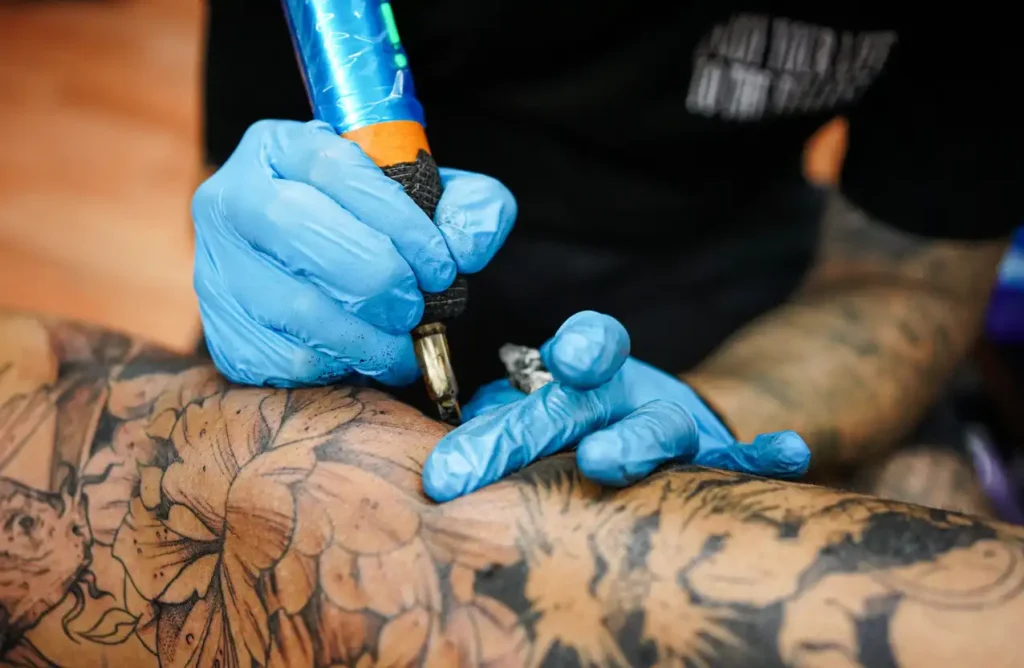

High-quality tattoo ink combines carefully selected pigments, consistent dispersion, stable formulation, appropriate viscosity, and rigorous microbiological quality controls. Reliable manufacturing, batch traceability, and regulatory compliance are equally important for ensuring consistent product characteristics and helping tattoo artists and distributors make informed purchasing decisions.
KinInk.co.kr
Choosing the right tattoo ink is one of the most important decisions for professional tattoo artists, studios, and tattoo product distributors. High-quality tattoo ink is not defined by color intensity alone. It is the result of carefully selected pigments, stable formulation, consistent dispersion, appropriate viscosity, rigorous microbiological controls, reliable manufacturing processes, and transparent quality documentation.
A high-quality tattoo ink should deliver predictable color performance while meeting applicable safety and regulatory requirements. Whether used for black-and-gray work, traditional tattooing, realism, or vibrant color designs, the ink should demonstrate batch-to-batch consistency, controlled ingredient quality, appropriate packaging, and traceability. Understanding these characteristics helps tattoo professionals make informed purchasing decisions and manufacturers develop products that meet the expectations of the global tattoo industry.
Table of Contents
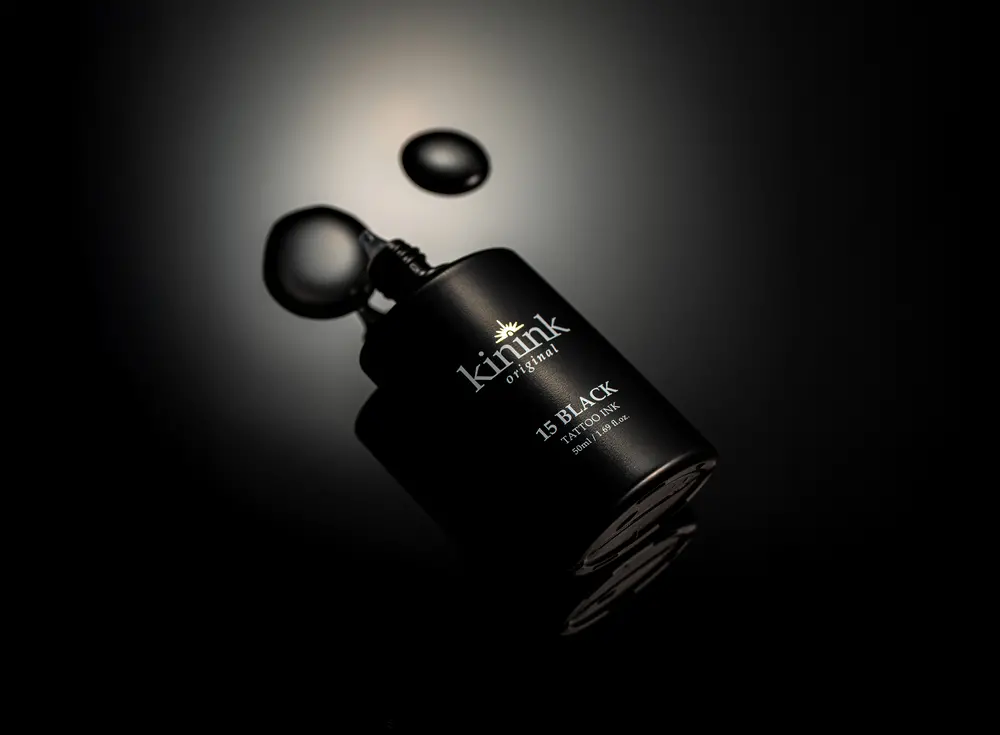
What Is High-Quality Tattoo Ink?
High-quality tattoo ink is a professionally formulated pigment suspension designed for tattooing, with controlled physical and chemical properties, documented ingredient specifications, appropriate microbiological quality, and consistent manufacturing standards.
Unlike ordinary printing ink or paint, tattoo ink is intended to be introduced into the dermal layer of human skin. This makes its formulation and manufacturing particularly important.
Several factors determine overall product quality:
- Pigment quality: Appropriate pigment identity, purity, and consistency.
- Color performance: Predictable color characteristics and stability.
- Pigment dispersion: Uniform distribution of pigment particles throughout the liquid.
- Formulation stability: Resistance to unwanted separation, aggregation, and changes during storage.
- Viscosity: Consistent handling and flow characteristics.
- Microbiological quality: Appropriate controls to prevent harmful microbial contamination.
- Manufacturing standards: Controlled production, sanitation, testing, and documentation.
- Product traceability: Clear batch identification, labeling, and supply-chain records.
No single characteristic determines whether a tattoo ink is high quality. Professional evaluation requires considering the complete product and its manufacturing history.
High-Quality Pigments: The Foundation of Tattoo Ink
Pigments are the primary components responsible for the color of tattoo ink. Their chemical composition, particle characteristics, purity, and compatibility with the formulation influence the finished product’s appearance and physical behavior.
Pigment Purity and Ingredient Selection
A professional tattoo ink manufacturer should establish specifications for every pigment used in its formulations.
Important considerations include:
- Verified pigment identity and composition
- Supplier qualification and ingredient traceability
- Appropriate impurity limits
- Heavy metal and other contaminant controls
- Compliance with applicable chemical restrictions
- Consistent raw material specifications
Pigment selection should never rely solely on visual appearance or price.
Two pigments may produce similar colors while having different chemical compositions and impurity profiles. Consequently, manufacturers should evaluate raw materials using appropriate analytical methods and supplier documentation.
Organic and Inorganic Pigments
Tattoo formulations may use different pigment chemistries depending on the desired color and technical requirements.
Organic pigments are carbon-based compounds commonly used to produce a broad range of vivid colors. Their performance depends on the specific pigment chemistry, formulation, and dispersion characteristics.
Inorganic pigments include certain metal-based or mineral-derived compounds used in applications requiring particular color characteristics.
Neither category is automatically safer or better. The suitability of an individual pigment depends on its identity, purity, intended use, applicable regulations, and supporting safety information.
Manufacturers should evaluate each ingredient independently rather than assuming that an entire pigment category is suitable for tattooing.
Pigment Dispersion and Formulation Consistency
Pigment dispersion is one of the most important technical characteristics of professional tattoo ink.
Tattoo ink is generally a suspension rather than a simple solution. Solid pigment particles are distributed throughout a liquid carrier system.
For consistent performance, the particles should remain appropriately dispersed under the product’s intended storage and handling conditions.
Why Is Pigment Dispersion Important?
Poor dispersion can contribute to:
- Visible pigment aggregation
- Uneven color distribution
- Excessive sediment formation
- Changes in flow characteristics
- Inconsistent product handling
- Difficulties achieving predictable results
A well-developed formulation uses suitable dispersing and stabilizing components to support uniform pigment distribution.
However, dispersion quality cannot be evaluated through appearance alone. A bottle may look uniform immediately after shaking but still contain formulation problems.
Professional manufacturers should establish measurable specifications and perform appropriate stability and physical-property testing.
Particle Size Distribution
Particle size distribution influences the behavior of pigment suspensions.
Important considerations include:
- The size distribution of pigment particles.
- The presence of unwanted aggregates.
- The compatibility between pigments and carrier components.
- The stability of the suspension during storage.
- The reproducibility of the manufacturing process.
Manufacturers may use particle-size analysis and microscopy, where appropriate, to characterize their formulations.
The objective is not simply to produce the smallest possible particles. It is to develop a controlled and reproducible particle distribution suitable for the intended product.
Color Performance and Long-Term Stability
Color performance is a major consideration when tattoo artists select professional ink.
A color that appears vibrant inside the bottle does not necessarily produce predictable results after application and healing.
The final appearance of a tattoo is influenced by multiple factors, including:
- Pigment chemistry
- Formulation characteristics
- Skin characteristics
- Tattooing technique
- Pigment placement
- Healing conditions
- Sun exposure and long-term skin changes
For this reason, manufacturers should avoid making unsupported promises about permanent color retention or identical results across all skin types.
Color Consistency Between Production Batches
Batch-to-batch consistency is particularly important for professional tattoo studios.
Imagine an artist using a particular red pigment for a large tattoo project. Several months later, the artist needs the same color to complete another section.
If the new production batch has significantly different color characteristics, achieving a visually consistent result becomes more difficult.
A reliable manufacturer should therefore establish:
- Standardized pigment specifications
- Controlled formulation procedures
- Defined color reference standards
- Documented production parameters
- Appropriate finished-product quality checks
Color measurement instruments, such as spectrophotometers, can help manufacturers compare color characteristics against established specifications.
Color Stability During Storage
Tattoo ink should maintain its specified physical and chemical properties throughout its stated shelf life when stored according to the manufacturer’s instructions.
Manufacturers should evaluate:
- Changes in color appearance
- Sedimentation behavior
- Redispersibility
- Viscosity changes
- Container compatibility
- Changes in relevant chemical properties
Stability testing should be conducted under scientifically justified conditions rather than relying on visual inspection alone.
Viscosity and Application Characteristics
Viscosity describes a liquid’s resistance to flow. In tattoo ink, it is an important formulation characteristic that influences handling and application.
Different tattoo styles and product formulations may require different flow characteristics.
For example:
| Tattoo Application | Relevant Ink Characteristics |
|---|---|
| Black and gray | Consistent dispersion and predictable dilution behavior |
| Traditional color | Consistent color formulation and handling |
| Realism | Controlled color characteristics and predictable blending behavior |
| Fine-line work | Consistent formulation and suitable application characteristics |
| Large-scale color work | Reproducible handling across larger application areas |
There is no universally correct viscosity for every tattoo ink.
An excessively thick formulation may be difficult to handle in certain applications, while an overly fluid formulation may behave differently from what an artist expects.
Manufacturers should define viscosity specifications appropriate to each product and evaluate them under controlled testing conditions.
Importantly, tattoo artists should follow the manufacturer’s instructions rather than adding unapproved substances or diluting products with non-sterile water.
Microbiological Safety: One of the Most Important Quality Standards
Microbiological quality is a critical aspect of tattoo ink manufacturing.
Because tattoo ink is introduced beneath the skin’s surface, contaminated products can introduce microorganisms directly into the body.
Potential contaminants include bacteria, fungi, and other microorganisms.
The U.S. Food and Drug Administration (FDA) has specifically highlighted microbial contamination as an important safety concern for tattoo inks.
In October 2024, the FDA issued final industry guidance addressing insanitary conditions during the preparation, packing, and holding of tattoo inks. Its recommendations include appropriate testing, sanitary manufacturing practices, validated sterilization methods where applicable, and corrective actions when contamination is identified. FDA+1
Why Can Sealed Tattoo Ink Still Be Contaminated?
A common misconception is that an unopened bottle is automatically safe.
However, contamination may occur during different stages of production, including:
- Raw material handling
- Water preparation
- Equipment cleaning
- Pigment processing
- Mixing and formulation
- Filling and packaging
- Product storage and distribution
A sealed bottle cannot eliminate contamination that occurred before packaging.
The FDA has also reported that microbial contamination has been identified in unopened tattoo ink containers. FDA+1
What Should Manufacturers Do?
A comprehensive microbiological control program should include:
- Raw material controls: Evaluate ingredients and incoming materials for relevant microbiological risks.
- Water quality management: Establish appropriate specifications and controls for water used in manufacturing.
- Equipment sanitation: Implement documented cleaning and sanitation procedures.
- Environmental controls: Manage manufacturing conditions and employee hygiene.
- Validated processing: Establish appropriate and validated microbial control methods.
- Finished-product testing: Conduct suitable microbiological testing on final formulations.
- Batch release procedures: Prevent products from being released when required quality criteria are not met.
A manufacturer should never assume that a product is sterile simply because it contains preservatives, looks clean, or carries a sterile claim on its label.
The actual manufacturing and testing evidence matters.
Ingredient Transparency and Chemical Safety
High-quality tattoo ink manufacturers should understand exactly what goes into their products.
Ingredient transparency helps professional tattoo artists, distributors, importers, and regulatory authorities evaluate product composition and suitability for their intended markets.
A professional product specification should address:
- Ingredient identification
- Pigment composition
- Carrier ingredients
- Relevant chemical impurities
- Applicable restricted substances
- Product labeling requirements
- Safety documentation
Understanding Heavy Metals and Chemical Impurities
Certain chemical impurities may present health concerns depending on their identity, concentration, and exposure.
Manufacturers should establish appropriate controls for substances such as:
- Lead
- Cadmium
- Mercury
- Nickel
- Chromium and relevant chromium compounds
- Polycyclic aromatic hydrocarbons (PAHs)
- Certain aromatic amines
The presence and acceptable limits of these substances depend on the applicable regulatory framework and the specific chemical form.
High-quality manufacturing requires more than purchasing pigments from reputable suppliers. Raw materials and finished products should be evaluated against relevant specifications.
EU REACH Compliance
The European Union has introduced specific restrictions for substances used in tattoo inks and permanent makeup under the REACH Regulation.
These restrictions cover various substances of concern, including certain carcinogenic, mutagenic, or reproductive toxic substances, skin sensitizers, irritants, colorants, and impurities.
The rules also establish concentration limits and labeling requirements for covered substances.
Manufacturers intending to supply the European market should review the applicable REACH restrictions and ensure that their formulations and documentation meet the relevant requirements.
Official reference: European Commission – REACH Restrictions.
Understanding US FDA Requirements
In the United States, tattoo inks are regulated as cosmetics, while their color additives are subject to separate regulatory requirements.
Importantly, the FDA states that no color additives are approved specifically for injection into the skin for cosmetic tattooing purposes.
Manufacturers and distributors should therefore avoid assuming that a pigment approved for use in ordinary cosmetics is automatically approved for intradermal tattooing.
Official reference: FDA – Tattoos, Temporary Tattoos & Permanent Makeup.
Regulatory compliance should be evaluated separately for each target market.
Manufacturing Standards and Quality Control
The quality of finished tattoo ink depends heavily on the manufacturing system behind it.
Even carefully selected pigments can produce inconsistent products if manufacturing procedures are poorly controlled.
A professional tattoo ink manufacturing facility should operate with documented procedures covering the entire production process.
Key Manufacturing Quality Control Stages
Stage 1: Raw Material Inspection
Incoming pigments, carriers, and other ingredients should be checked against established specifications.
Supplier qualification and documentation are essential parts of this process.
Stage 2: Formulation and Mixing
The manufacturer follows a defined formulation and mixing procedure to achieve the intended product characteristics.
Mixing parameters should be controlled and documented to support reproducibility.
Stage 3: Dispersion and Processing
The formulation undergoes appropriate processing to achieve the required pigment distribution and physical properties.
Stage 4: Microbiological and Physical Testing
Testing should be selected according to product specifications and relevant risks. This may include microbiological examination, viscosity measurements, color evaluation, and stability assessments.
Stage 5: Filling and Packaging
Filling equipment, containers, closures, and production environments should be controlled to minimize contamination risks.
Stage 6: Final Quality Approval
Finished products should undergo the required quality review before release.
The manufacturer should maintain records connecting each finished batch to its raw materials, production history, test results, and release decision.
Why Batch-to-Batch Quality Control Matters

For tattoo studios and distributors, consistency is essential.
If the same product behaves differently between production batches, artists may experience changes in application characteristics and color results.
A structured quality management system helps manufacturers identify deviations, investigate potential causes, and prevent recurring production problems.
Packaging, Labeling, and Shelf Life
Packaging is another important component of tattoo ink quality.
Even a well-formulated product can deteriorate or become contaminated if its container does not adequately protect it during storage and distribution.
High-quality packaging should be appropriate for the formulation and intended supply chain.
Important considerations include:
- Compatible bottle materials
- Reliable closure systems
- Protection against leakage
- Appropriate container integrity
- Clear product identification
- Batch or lot numbers
- Manufacturing and expiration information, where applicable
- Storage and handling instructions
Why Batch Numbers Are Important
Batch identification allows manufacturers and distributors to trace products throughout the supply chain.
For example, if a manufacturer identifies a quality issue with a particular pigment lot, batch records help determine which finished products may be affected.
This supports targeted investigations, product withdrawals, and recalls when necessary.
Understanding Tattoo Ink Shelf Life
Tattoo ink shelf life depends on formulation stability, packaging, manufacturing controls, and storage conditions.
Products should be stored according to the manufacturer’s instructions, away from unsuitable temperatures, direct sunlight, and other conditions that may compromise product quality.
Tattoo artists should also avoid using products that show signs of damaged packaging, unexpected changes, or expired labeling.
An important distinction is that visual appearance alone cannot establish microbiological safety.
How Can Tattoo Artists Identify High-Quality Tattoo Ink?
Tattoo artists do not normally have access to the laboratory equipment needed to verify every technical characteristic of an ink.
However, they can use a structured purchasing checklist to assess whether a manufacturer demonstrates appropriate quality practices.
| Evaluation Criteria | What to Look For |
|---|---|
| Manufacturer information | Identifiable manufacturer and contact details |
| Ingredient information | Appropriate ingredient and pigment documentation |
| Product consistency | Defined specifications and consistent performance |
| Microbiological controls | Relevant testing and manufacturing controls |
| Batch traceability | Clearly identifiable lot or batch numbers |
| Packaging | Intact, appropriate and properly sealed packaging |
| Regulatory documentation | Market-specific compliance information |
| Technical support | Accessible product information and manufacturer assistance |
Questions to Ask a Tattoo Ink Manufacturer
Before purchasing a new product range, professional artists and distributors should consider asking:
- What pigments and carrier ingredients are used?
- What quality controls are applied to incoming raw materials?
- How is microbial contamination prevented?
- What microbiological testing is performed on finished products?
- Are sterilization claims supported by validated processes?
- How is batch-to-batch consistency monitored?
- What stability testing supports the stated shelf life?
- Can the manufacturer provide relevant product specifications and safety documentation?
Manufacturers should provide accurate, verifiable answers rather than relying on marketing language.
Common Problems Associated with Low-Quality Tattoo Ink
Poor formulation or inadequate manufacturing controls can create problems throughout the product lifecycle.
Understanding these issues helps tattoo professionals recognize the importance of purchasing from manufacturers with documented quality systems.
| Potential Problem | Possible Cause | Quality Control Approach |
|---|---|---|
| Uneven pigment distribution | Inadequate dispersion | Dispersion and particle characterization |
| Excessive sedimentation | Formulation instability | Stability testing |
| Inconsistent color | Variation in raw materials or production | Batch comparison |
| Unpredictable viscosity | Formulation variation | Controlled viscosity specifications |
| Microbial contamination | Poor sanitation or processing | Microbiological controls |
| Leakage | Inadequate packaging | Container integrity testing |
| Chemical impurities | Inadequate raw material controls | Ingredient and contaminant analysis |
It is important to distinguish product quality issues from problems caused by tattooing technique, skin characteristics, aftercare, or other factors.
For example, uneven healing does not automatically indicate defective ink. Similarly, an allergic reaction cannot be attributed to a particular ingredient without appropriate investigation.
If a tattoo artist or customer experiences a suspected infection or significant adverse reaction, professional medical assessment is important. The product brand, color, and batch number should also be documented for investigation.
What Should Global Tattoo Ink Distributors Look for in a Manufacturer?
For international distributors and private-label brands, choosing a tattoo ink manufacturer involves more than comparing product prices.
A reliable manufacturing partner should demonstrate the ability to maintain consistent quality, provide appropriate technical documentation, and support the requirements of different export markets.
Five Important Factors for B2B Buyers
1. Manufacturing Capability
Evaluate the manufacturer’s production capacity, formulation capabilities, equipment, and quality management procedures.
2. Product Development
A capable manufacturer should have a documented approach to developing and evaluating different colors, formulations, and product specifications.
3. Quality Documentation
Request relevant documents, including:
- Product specifications
- Safety Data Sheets (SDS), where applicable
- Ingredient information
- Certificates of Analysis (CoA)
- Microbiological test reports
- Stability test information
- Manufacturing and batch traceability records
The availability and scope of these documents will vary depending on the product and market.
4. Export and Regulatory Support
International distributors need to understand import requirements, product labeling, chemical restrictions, and documentation requirements in their destination markets.
A manufacturer with experience supporting international customers can make this process more manageable.
5. OEM and Private Label Services
Businesses developing their own tattoo ink brands should evaluate whether a manufacturer can support:
- Custom product development
- Private-label packaging
- Product specification development
- Consistent production batches
- Export packaging
- Technical documentation
A long-term manufacturing relationship should be built on transparent specifications, reproducible production, and verifiable quality controls.
FAQs
What makes high-quality tattoo ink different from ordinary tattoo ink?
High-quality tattoo ink is distinguished by controlled pigment purity, consistent dispersion, stable formulation, appropriate viscosity, and documented manufacturing quality. Professional tattoo ink manufacturers also implement microbiological testing, batch traceability, and quality assurance procedures to maintain consistent product standards.
How can you identify safe and high-quality tattoo ink?
To identify high-quality tattoo ink, check the manufacturer’s ingredient information, pigment specifications, microbiological testing, batch numbers, and product documentation. Reliable tattoo ink manufacturers should provide transparent quality information and demonstrate appropriate manufacturing and contamination-control procedures.
Why is pigment quality important in professional tattoo ink?
Tattoo ink pigment quality influences color characteristics, dispersion, formulation stability, and consistency. High-quality tattoo pigments should meet defined specifications for identity, purity, and relevant chemical impurities to support reliable professional tattoo ink formulations.
How is professional tattoo ink manufactured?
Professional tattoo ink manufacturing involves raw material inspection, pigment selection, controlled formulation, pigment dispersion, microbiological quality controls, stability testing, filling, and final product inspection. Consistent manufacturing procedures help maintain reproducible product characteristics across production batches.
What should tattoo ink distributors look for in a reliable manufacturer?
Tattoo ink distributors should evaluate manufacturing capabilities, product specifications, safety documentation, microbiological testing, batch traceability, and regulatory compliance. Manufacturers offering OEM tattoo ink production and private-label services should also demonstrate consistent quality control and international export support.
The Future of High-Quality Tattoo Ink Manufacturing
The global tattoo industry continues to develop, creating greater expectations for professional products and manufacturing transparency.
In 2026, several areas deserve particular attention.
Advanced Formulation Development
Manufacturers are increasingly expected to understand the relationship between pigment properties, dispersion, formulation stability, and application characteristics.
Greater Emphasis on Microbiological Quality
Microbial contamination prevention and appropriate finished-product testing are becoming increasingly important considerations for responsible manufacturers.
Regulatory Awareness
International suppliers must understand that the requirements for tattoo inks differ between markets. EU REACH restrictions and US FDA requirements are particularly important considerations for exporters.
Supply Chain Transparency
Distributors increasingly need access to product specifications, ingredient information, traceability records, and reliable manufacturing documentation.
OEM and Private Label Development
As international brands seek manufacturing partners, the ability to offer consistent production and appropriate technical support becomes an important competitive advantage.
Ultimately, the future of professional tattoo ink manufacturing will depend on combining formulation expertise, responsible manufacturing, product consistency, and transparent quality assurance.
References
- European Commission – REACH Restrictions: Substances in Tattoo Ink and Permanent Makeup.
- U.S. FDA – Tattoos, Temporary Tattoos & Permanent Makeup

