


To become a KinInk tattoo ink distributor, contact KinInk through its official partnership page, introduce your business and target market, and request wholesale pricing, minimum order quantities, product documentation, and export terms. Before ordering, verify local import regulations and confirm distribution rights directly with KinInk.
KinInk.co.kr
Becoming a KinInk tattoo ink distributor starts with contacting KinInk through its official website, introducing your business and target market, and requesting information about wholesale pricing, minimum order quantities (MOQs), product documentation, and international distribution opportunities. KinInk, a tattoo ink brand operated by South Korean company Welsquare Inc., invites overseas buyers to submit inquiries because online ordering is currently available only within South Korea. International purchasing requests are handled through the company’s inquiry process. Official KinInk Products | KinInk Partnership Page
For prospective distributors, the next step is to evaluate whether KinInk’s products fit the local market, confirm the regulatory requirements for the intended country, and agree on commercial terms with the company. A successful distribution partnership requires more than access to inventory: it also depends on product traceability, appropriate documentation, reliable supply arrangements, market development, and clear responsibilities between the manufacturer and distributor.
This guide explains how global buyers can prepare a distributor application, assess KinInk products, plan an import strategy, and build a sustainable tattoo ink distribution business.
Table of Contents
What Is a KinInk Tattoo Ink Distributor?
A KinInk distributor is a business that purchases or otherwise obtains authorization to supply KinInk products to customers in an agreed market. Depending on the commercial arrangement, those customers may include professional tattoo artists, tattoo studios, retailers, specialist suppliers, or other resellers.
The exact rights available to a distributor must be confirmed directly with KinInk. For example, an authorized distributor agreement may address territorial coverage, wholesale pricing, sales targets, online sales, marketing permissions, and whether the distributor has exclusive rights.
Not every distributor relationship is exclusive. A wholesale buyer may simply purchase products for resale, while an appointed regional distributor may have additional responsibilities for marketing, customer support, inventory management, and market development.
Before applying, decide which business model best fits your company.
| Distribution model | Main responsibility | Best suited to |
|---|---|---|
| Wholesale reseller | Purchase products and resell them to customers | Established retailers and online stores |
| Regional distributor | Develop sales across an agreed territory | Importers and specialist supply companies |
| Studio supplier | Supply tattoo studios and professional artists | Local tattoo equipment businesses |
| Strategic distribution partner | Coordinate market development and brand promotion | Companies with established industry networks |
These are common distribution models, not a statement that KinInk currently offers every arrangement. Confirm available partnership structures with the company before making commercial commitments.
Understand KinInk’s Product Portfolio
Before requesting distribution rights, review the products you intend to sell. Product selection affects your target customers, marketing strategy, regulatory review, inventory requirements, and expected sales volume.
According to KinInk’s official product information, its current portfolio includes the following black ink products:
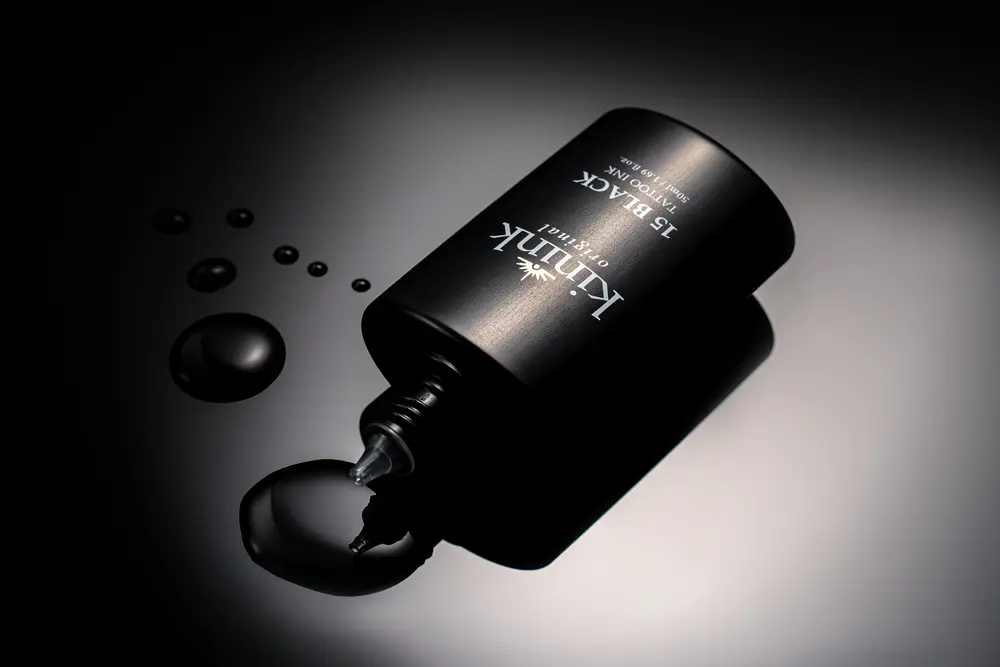
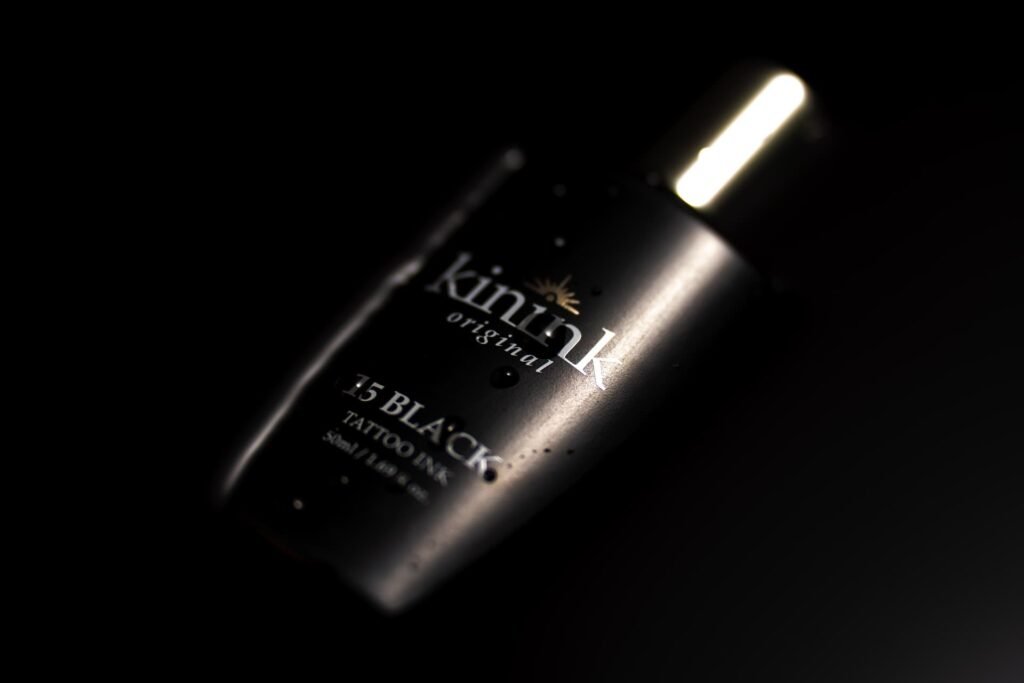
- KinInk Original 15 Black Tattoo Ink: A general tattoo ink designed for applications including line work and shading.
- KinInk Kin Point Black SMP Ink: A product intended for scalp micropigmentation (SMP).
- KinInk Kin Eyes Black Eyeline Ink: An ink intended for eyeline applications.
The product page lists different package sizes and application categories. Buyers should confirm current specifications, available pack sizes, intended uses, and export availability with KinInk before preparing a purchase order. Source: KinInk Products
Why product specialization matters
A distributor serving professional tattoo studios may focus on general tattoo ink, while a specialist serving scalp micropigmentation practitioners may require a different product range and customer education strategy.
These categories should not be treated as interchangeable. Tattoo inks and products intended for SMP or permanent makeup can have different formulations, application requirements, and regulatory considerations. A distributor should verify the manufacturer’s intended-use instructions and applicable local rules for every product.
For an initial market entry, it may be more practical to evaluate a focused selection of products than to purchase a large quantity of every available item. The appropriate starting inventory depends on customer demand, shelf life, shipping costs, minimum order requirements, and the supplier’s terms.
Check Whether Your Business Is Ready to Become a Distributor
Before approaching KinInk, prepare a short business profile that explains who you are, whom you serve, and how you plan to sell the products.
KinInk’s team will need enough information to understand your commercial intentions and assess your inquiry.
Information to prepare
Company information
- Registered business name and country of operation
- Company website and business contact details
- Relevant import, wholesale, retail, or distribution experience
- Existing product categories and sales channels
Target market
- Countries or regions you intend to serve
- Target customers, such as tattoo studios, artists, or retailers
- Estimated customer reach and potential demand
- Main competitors and your planned market positioning
Distribution plan
- Proposed sales channels, including wholesale, e-commerce, or physical retail
- Initial product selection and estimated order volume
- Inventory and fulfillment arrangements
- Marketing activities and customer support capabilities
Compliance readiness
- Local product classification and import requirements
- Required labeling and documentation
- Any applicable importer or responsible-person obligations
- Procedures for product traceability, complaints, and recalls
A distributor does not need to claim experience it does not have. A new business can present a credible application by explaining its niche, existing customer relationships, launch budget, and practical market-entry plan.
How to Apply to Become a KinInk Distributor
The following process provides a practical framework for initiating a partnership. KinInk’s actual approval process, commercial terms, and onboarding requirements must be confirmed directly with the company.
Step 1: Review the official KinInk website
Start with the official product and partnership pages:
Review the available products, intended applications, product information, and existing partnership opportunities. This helps you identify specific products and questions rather than sending a general request for a price list.
Step 2: Submit a distributor inquiry
Use the official partnership inquiry form to explain your interest in distributing KinInk products internationally.
Include your company name, country, website, business model, target customers, and intended sales territory. If you want to explore exclusive distribution, identify the proposed territory and explain how your company would develop the market.
Ask KinInk to confirm whether it accepts distributor applications for your country and whether any existing arrangements affect availability.
Step 3: Request wholesale and commercial information
Before estimating profitability, request written confirmation of the following:
- Wholesale prices and applicable order quantities
- Minimum order quantity and whether it varies by product
- Sample availability and sample costs
- Available packaging sizes and case quantities
- Payment methods and payment terms
- Production and dispatch lead times
- Shipping arrangements and export documentation
- Product shelf life and storage requirements
- Policies for damaged, defective, or recalled products
- Marketing resources and permitted brand usage
Do not assume that KinInk has a fixed MOQ, standard distributor discount, or published exclusivity program. These terms need to be confirmed by the company.
Step 4: Evaluate samples and documentation
Where samples are available and legally importable, assess the products before placing a substantial order.
Review the packaging, batch identification, product consistency, usability within the manufacturer’s instructions, and documentation supplied for the intended market.
Ask for relevant quality records, test reports, ingredient information, safety documentation, and product-specific regulatory information. Verify that documents apply to the exact product and formulation you plan to sell.
Step 5: Confirm market authorization and commercial terms
Before signing an agreement, determine which party is responsible for local regulatory checks, import clearance, product labeling, customer complaints, adverse-event reporting, and product recalls.
If the relationship involves territorial exclusivity, document the territory, sales channels, performance conditions, duration, renewal rules, and termination provisions.
Step 6: Plan a controlled market launch
Once the commercial terms and regulatory requirements are confirmed, begin with a manageable inventory and a defined group of target customers.
Track inquiries, sample requests, conversion rates, repeat purchases, inventory turnover, and customer feedback. These metrics help determine whether to expand the product range or increase order quantities.
Tattoo Ink Quality and Safety: What Distributors Must Verify
Tattoo ink is different from an ordinary decorative or retail product because it is introduced into the skin. Quality and safety documentation should therefore be a core part of supplier evaluation.
The U.S. Food and Drug Administration (FDA) identifies risks associated with tattoo inks, including microbial contamination, allergic reactions, and other adverse effects. In October 2024, the FDA issued final guidance addressing unsanitary conditions in the preparation, packing, and holding of tattoo inks and the risk of microbial contamination. The agency recommends measures to identify and prevent contamination during manufacturing and distribution. FDA guidance
A professional distributor should evaluate at least four areas.
Manufacturing and microbiological controls
Ask what controls are used to prevent microbial contamination and what testing or release procedures apply to the product. Do not assume that a sealed bottle is sterile or microbiologically safe without supporting evidence.
Chemical composition and testing
Request applicable ingredient information and analytical test reports. Depending on the product and destination market, relevant assessments may include restricted substances, heavy metals, and other chemical parameters.
A laboratory report should identify the product or sample tested, the analytical method where relevant, the date, and the results. A test report for one formulation should not automatically be treated as proof that every product in the portfolio has the same characteristics.
Batch identification and traceability
Confirm that products can be traced through batch or lot identifiers and that the supplier has a process for handling quality complaints, investigating problems, and coordinating recalls when necessary.
Storage and transportation
Ask for the manufacturer’s storage instructions, shelf-life information, and any relevant transport requirements. Establish a process for checking packaging condition and batch details when shipments arrive.
These checks help distributors make informed purchasing decisions and prepare for responsible post-sale support.
Understand the Regulatory Requirements in Your Target Market
There is no single global approval that automatically authorizes every tattoo ink product for sale in every country. Regulatory obligations depend on the destination market, product type, ingredients, intended use, labeling, and the role of the importer.
United States
The FDA treats inks used in intradermal tattooing, including permanent makeup, as cosmetics under the Federal Food, Drug, and Cosmetic Act. Color additives are subject to applicable legal requirements, and the agency has traditionally not exercised its premarket approval authority for color additives used in tattoo inks in the same way as for other cosmetic color additives. This does not mean every tattoo ink is approved for injection into the skin.
Before importing, confirm the requirements that apply to the product and your business. Relevant questions may include facility registration, product listing, ingredient and labeling obligations, import admissibility, and applicable state or local rules. Facility registration or product listing should not be advertised as FDA approval of a tattoo ink.
European Union
The EU REACH restriction on substances in tattoo inks and permanent makeup limits specified substances and impurities because of health concerns. The applicable requirements can affect formulation, chemical testing, labeling, and whether a product can be placed on the market.
Importers should verify the current legal text and relevant requirements for each product. Do not rely solely on a general supplier statement or a test report that does not cover the applicable restrictions.
Other international markets
Countries in Asia, the Middle East, and other regions may apply different product classifications, import procedures, labeling rules, or licensing requirements.
Before ordering, consult the relevant national authority, a qualified local regulatory professional, or an experienced customs broker. Confirm that the intended product can legally be imported and sold before committing to a large shipment.
Calculate Your Tattoo Ink Distribution Costs

A distributor’s margin should be calculated from the full landed cost, not just the wholesale price.
Landed cost generally includes the product purchase price and the expenses required to bring the goods to the destination, such as freight, insurance where applicable, customs duties, brokerage, and other import-related charges. Domestic fulfillment and selling expenses must also be considered when calculating profitability.
For example, assume a hypothetical shipment has the following costs:
| Cost component | Example amount |
|---|---|
| Product purchase cost | $2,000 |
| International freight and insurance | $300 |
| Customs, brokerage, and import charges | $200 |
| Total landed cost | $2,500 |
If the shipment contains 500 units, the landed cost is $5 per unit before local warehousing, domestic shipping, marketing, payment processing, and other operating expenses.
If a unit sells for $10, the gross margin based on that $5 landed cost is 50%. However, the final operating profit will be lower after additional expenses.
The formula is:
Gross margin (%) = (Selling price − Landed cost per unit) ÷ Selling price × 100
Use confirmed supplier quotations, destination-specific import estimates, and realistic selling prices to build your own financial model. The example above is illustrative and does not represent KinInk’s actual pricing, shipping costs, or distributor margins.
Build a Local Marketing Strategy for KinInk
Receiving authorization to distribute a product is only the beginning. A distributor must also help customers understand the product, locate accurate information, and place repeat orders.
Build a dedicated local product page
Create a page explaining the product’s intended use, available package sizes, manufacturer information, and relevant documentation. Use locally appropriate terminology and ensure all technical and regulatory claims are supported.
Develop professional educational content
Useful content may include product selection guides, storage instructions, batch traceability explanations, and guides to evaluating supplier documentation.
Educational articles can attract customers researching tattoo ink products while helping them understand the distributor’s expertise. Avoid claims that a product is risk-free, universally compatible, or legally approved in every market.
Establish relationships with tattoo studios
Reach out to relevant studios, professional artists, and specialist retailers. Where samples or demonstrations are available and permitted, use them to collect structured feedback about packaging, usability, and customer needs.
Use targeted B2B outreach
Contact prospective resellers with a concise introduction, relevant product information, and a clear wholesale inquiry process. Trade events, professional networks, and specialist industry communities may also help identify qualified buyers.
Track business performance
Monitor qualified inquiries, sample-to-order conversion, customer acquisition costs, reorder rates, inventory turnover, and gross margin. These indicators provide a better basis for expansion decisions than website traffic alone.
What Should a KinInk Distributor Agreement Include?
Before committing to a long-term relationship, make sure the agreement clearly defines the commercial arrangement.
| Agreement term | What to confirm |
|---|---|
| Territory | Countries or regions covered |
| Exclusivity | Whether rights are exclusive or non-exclusive |
| Pricing | Wholesale rates, currency, and revision procedures |
| Orders | MOQ, payment terms, and order acceptance |
| Supply | Lead times, shipping responsibilities, and delivery terms |
| Compliance | Responsibilities for importation, labeling, and local requirements |
| Quality | Traceability, complaints, and corrective actions |
| Marketing | Brand assets, advertising claims, and trademark usage |
| Performance | Sales targets, reporting, and review periods |
| Termination | Notice, outstanding orders, and remaining inventory |
If exclusivity is requested, establish how it will be earned and maintained. For example, the parties might agree to review performance after an initial trial period, subject to negotiated sales targets and other conditions.
Any such arrangement should be documented in writing. Do not present an informal conversation or preliminary quotation as a confirmed exclusive distribution appointment.
FAQs
How can I become a KinInk tattoo ink distributor?
To become a KinInk tattoo ink distributor, visit the official KinInk partnership page and submit your company information, target country, sales channels, and proposed distribution plan. Contact KinInk directly to confirm eligibility, wholesale terms, product availability, and potential distribution rights.
Does KinInk offer wholesale tattoo ink for international buyers?
International buyers interested in KinInk wholesale tattoo ink should contact the company directly to request current pricing, minimum order quantities, packaging options, shipping terms, and export documentation. Availability and commercial conditions must be confirmed with KinInk before placing an order.
How do I find a reliable Korean tattoo ink manufacturer for distribution?
When evaluating a Korean tattoo ink manufacturer, review its product specifications, quality documentation, batch traceability, manufacturing information, and export capabilities. Request relevant test reports and confirm that the products meet the requirements of your destination market before establishing a distribution partnership.
What are the requirements for importing KinInk tattoo ink into my country?
Importing KinInk tattoo ink may require product documentation, compliant labeling, customs declarations, and additional regulatory checks depending on the destination country and product category. Verify applicable requirements with the relevant authorities or a qualified local compliance professional before purchasing inventory.
Can I become an exclusive KinInk tattoo ink distributor in my country?
Exclusive KinInk tattoo ink distribution depends on the commercial arrangements offered and approved by KinInk. Contact the company to discuss territorial availability, sales expectations, marketing responsibilities, and contract terms. Any exclusive distribution rights should be confirmed in a written agreement.
Conclusion: Start Your KinInk Distribution Inquiry
Becoming a KinInk tattoo ink distributor requires a clear business proposal, careful product evaluation, destination-specific regulatory checks, and an agreement that defines both parties’ responsibilities.
For global buyers, the most practical first step is to review KinInk’s product range and submit a detailed inquiry through the official partnership page. Confirm wholesale prices, MOQs, sample availability, documentation, shipping arrangements, and territorial rights before making a purchasing commitment.
A well-prepared distributor can then build a focused market-entry plan, establish professional customer relationships, and measure demand before expanding inventory.
Interested in distributing KinInk products in your country?
Visit the official KinInk Partnership Inquiry page to introduce your business and discuss potential international distribution opportunities.
Important note: Product availability, distributor approval, pricing, MOQs, exclusivity, and export terms must be confirmed directly with KinInk. Regulatory information in this article is general guidance, not legal advice or confirmation that a specific product is authorized for sale in a particular market.

